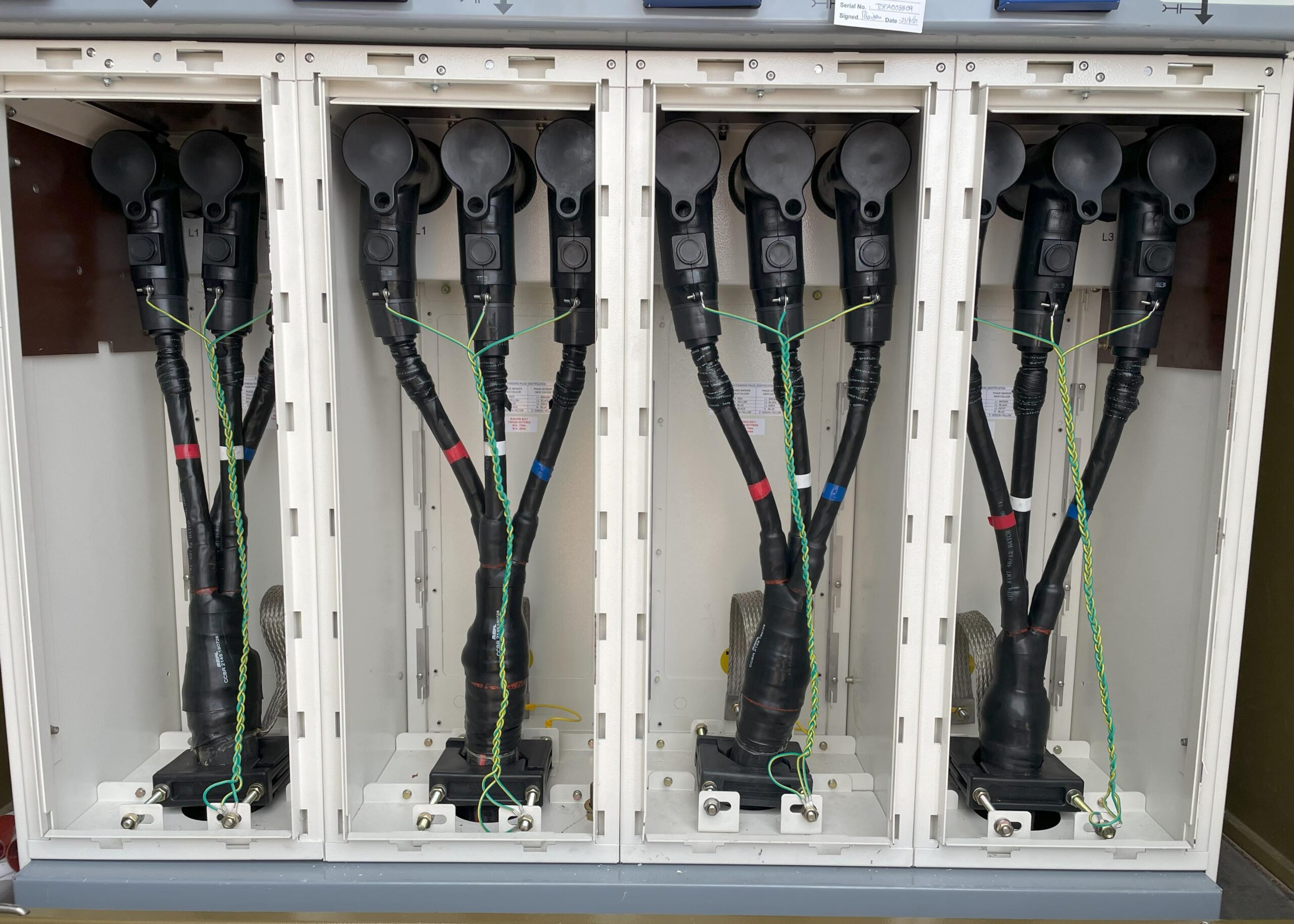
MV (Medium Voltage) cables typically handle voltages from 1kV to 33kV and are used for distribution networks and industrial applications.
LV (Low Voltage) cables operate at below 1kV and are commonly used for domestic, commercial and light industrial connections.
The installation, testing, and jointing methods differ based on voltage class, insulation type, and application.
Key safety practices include:
Isolation and lockout/tagout procedures
Voltage verification before handling
Use of arc flash PPE and insulated tools
Proper earthing and clearance maintenance
Adherence to SANS/IEC electrical safety standards
Reliable joints depend on:
Proper stripping and preparation of conductors
Use of certified jointing kits and heat-shrink materials
Moisture sealing and mechanical protection
Common post-installation tests include:
Insulation resistance (Megger Test)
Continuity and phase rotation tests
High voltage withstand/VLF testing for MV cables
Earth resistance testing
Thermal imaging during live testing (optional but recommended)
Failures are often due to:
Poor jointing or termination workmanship
Mechanical damage during installation
Water ingress or poor sealing
Overloading, overheating, or improper cable sizing
Lack of periodic inspection and testing
Development Choice by www.websitedesign.co.za and Hosted Selected www.websitehosting.co.za